Measure the edge before anything else
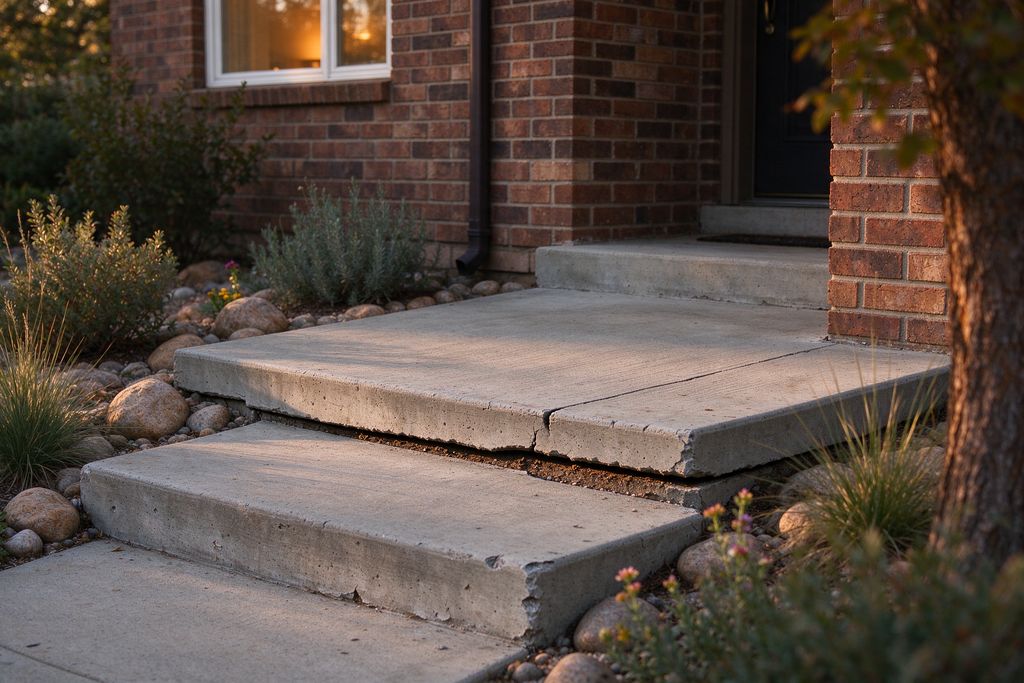
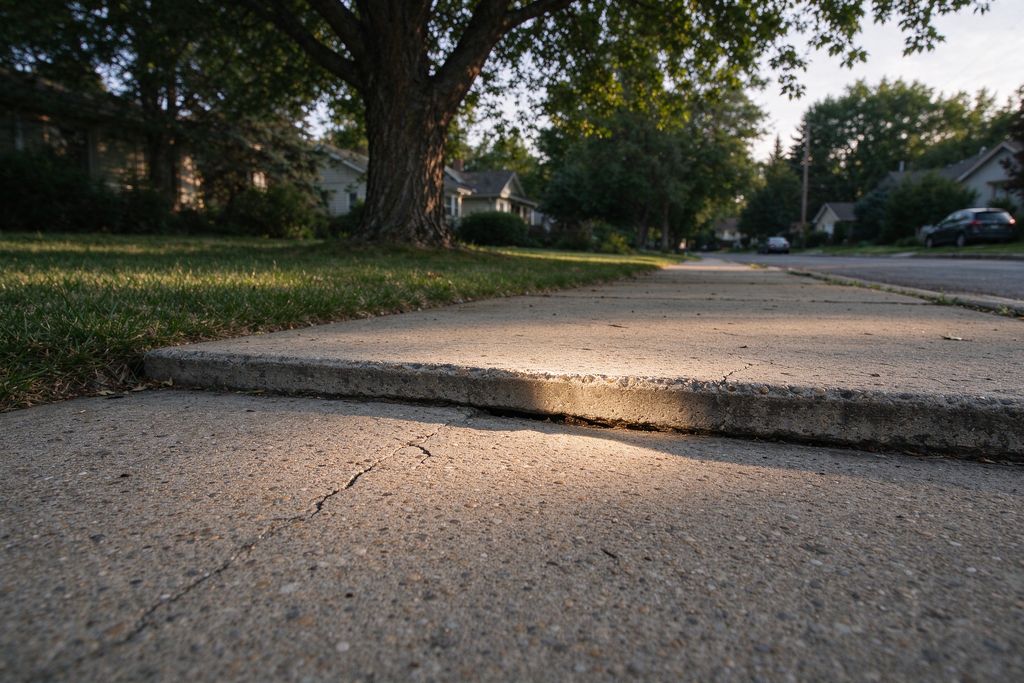
A trip hazard is a number, not a feeling. Lay a straightedge or a level on the higher panel so it overhangs the joint, then measure straight down to the lower panel with a tape. Measure at the worst point; offsets are rarely even across the width of the walk. Write it down in eighths of an inch and take a photo with the tape in frame.
Measure again in late winter and late summer if you can. On swelling clay the offset can change by season, and a panel that is borderline in August can be a clear hazard in March.
Check whether the high side or the low side moved. If the high panel is level with the rest of the walk and the low one dropped, lifting is the natural fix. If the high panel rose above its neighbours, a tree root or swelling clay is the likely cause, and lifting the low one only moves the problem.
Offset gauge
Slide to your measured offset. The bands follow federal accessibility guidance for changes in level, which many sidewalk programs mirror. Your city's own threshold is what applies to a public walk.
How big is the edge?
Eighths of an inchWho is responsible: owner, HOA or city
Colorado has no single statewide rule. Responsibility for a public sidewalk is set by each city or town, and the arrangements vary:
- Adjacent owner responsible. Many Colorado cities make the owner of the property next to the sidewalk responsible for keeping it in repair, even though the walk sits in the public right-of-way.
- City repair or cost-share programs. Some cities inspect sidewalks on a schedule, notify owners, and offer to do the work or split the cost.
- HOA-maintained walks. In many subdivisions, walks in common areas belong to the HOA. The covenants and the plat say which ones.
- Private walks. The path from the street to your door is almost always yours.
Before you hire anyone for a public sidewalk, call or check the website of your city's public works or transportation department. Ask three things: who is responsible, whether a permit or a licensed contractor is required to work in the right-of-way, and whether there is a repair program. Get the answer in writing if you can.
Do not grind, cut or lift a public sidewalk on your own initiative without checking first. Some cities require specific methods, permits or registered contractors for right-of-way work, and unpermitted work can mean doing it twice.
Lift, grind or replace
| Fix | How it works | Good for | Watch out for |
|---|---|---|---|
| Lifting | Raise the low panel with slurry or foam | Sound panel that dropped | Heaved neighbours; buried lines |
| Grinding or cutting | Bevel or shave the high edge | Small offsets on stable panels | Leaves a ramp on larger offsets; dust |
| Replacement | Remove and pour the panel | Broken, heaved or root-lifted panels | Permits, cure time, tree roots |
Tree roots are their own category. A panel lifted by a root will keep moving as the root grows. Cutting roots near a public street tree usually needs the city forester's say, and lifting the neighbours to match only spreads the slope. That is a replacement conversation.
What to do first
- Offset under 1/4 inchTHENMonitor it each spring; seal the joint.
- 1/4 to 1/2 inch, stable panelTHENGrinding or a small lift; ask your city first.
- Over 1/2 inch, panel droppedTHENLift the low panel and seal the joints.
- Over 1/2 inch, panel pushed upTHENReplace, and deal with the root or clay.
- Public walk, any sizeTHENCheck with your city before hiring.
Measure, photograph, and find out who owns the walk. Then fix the low panel in a way that does not leave a ramp, and seal the joints so it does not drop again.
Questions
Who is responsible for the sidewalk in front of my house in Colorado?
It depends on the city. Many Colorado municipalities make the adjacent property owner responsible for maintaining the public sidewalk, while others handle repairs themselves or share the cost. Check with your city before doing anything.
How big a height difference counts as a trip hazard?
Federal accessibility guidance allows a change in level up to 1/4 inch, calls for a bevel between 1/4 and 1/2 inch, and treats anything taller as needing a ramp. Many cities use a similar threshold for sidewalk repair, but their own rules decide.
Does my HOA have to fix the sidewalk?
Sometimes. HOA covenants and plats decide which walks the association maintains. Common-area walks are often the HOA's job; the public walk along the street may still belong to the city or the owner. Read your covenants and ask the HOA in writing.