How each method actually works
All three fixes start from the same diagnosis: the soil under the slab is no longer holding it where it belongs. What differs is whether you put something back under the old concrete or start over with new concrete.
Mudjacking: cement slurry under pressure
Mudjacking, also called slabjacking, pumps a slurry under the slab through holes drilled in a planned pattern. The mix is typically soil or sand, Portland cement and water, sometimes with limestone or fly ash. The slurry fills the void first. Once the void is full, continued pumping pressure raises the slab.
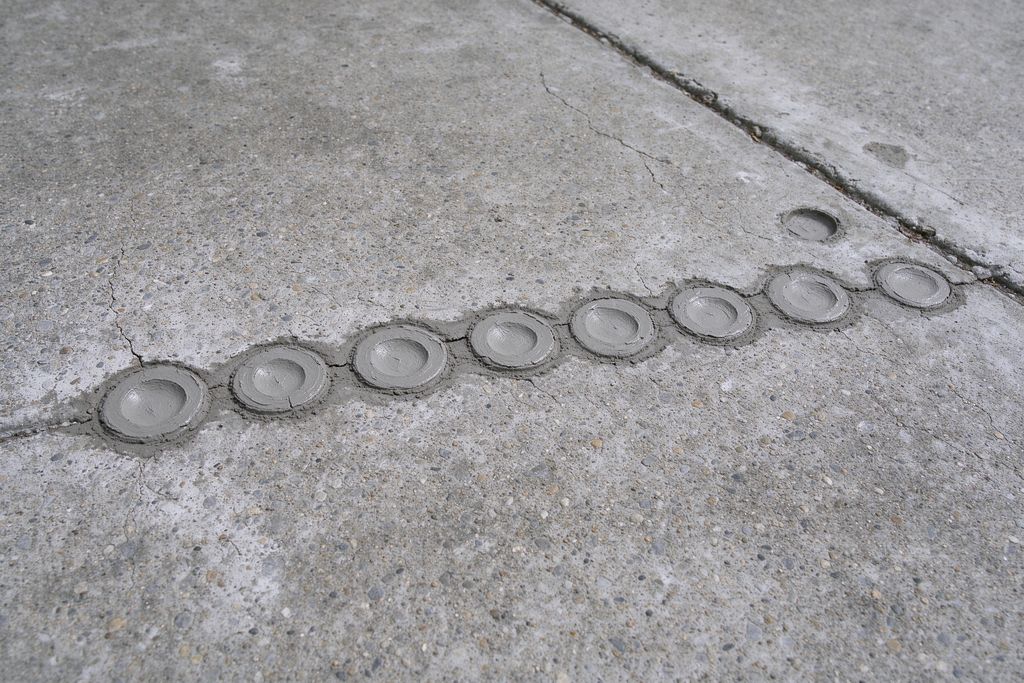
The holes are larger than foam ports, commonly about 1.5 to 2 inches across, and they get patched with a cement grout afterward. The patches will show; they rarely match the old concrete exactly. Slurry is heavy, roughly as heavy as the soil it replaces, so it adds load to whatever is underneath.
Polyurethane foam: polyjacking or foam jacking
Foam lifting injects a two-part polyurethane through small ports, often around 5/8 inch. The liquids react, expand and harden within minutes. Lift-grade foams weigh a small fraction of what slurry weighs, which matters on soft or wet soil where extra weight could start the next round of settling.
Foam does not wash out, and it cures fast enough that many crews allow traffic the same day. The tradeoff is cost: foam material usually costs more than slurry, so foam bids tend to run higher, especially when the void is large.
Replacement: tear out and pour again
Replacement removes the slab, corrects the base, and pours new concrete. It is the only option that fixes concrete that is broken, crumbling or scaling, and the only practical one for a slab that has been pushed up rather than dropped. It is also the most disruptive: demolition, haul-off, forming, and a curing period, typically around a week before you park on it.
Replacement is your one chance to fix the base. Ask every replacement bidder how deep they will dig, what they will compact, and whether they will regrade so water runs away. New concrete on the same soft base settles the same way.
Side by side, without the sales pitch
| Factor | Mudjacking | Polyurethane foam | Replacement |
|---|---|---|---|
| Hole size | About 1.5 to 2 in | Often about 5/8 in | None; new slab |
| Added weight | Heavy | Very light | New base and slab |
| Back in use | Usually a day or more | Often same day | Typically about a week for cars |
| Relative cost | Usually lowest | Usually higher than slurry | Usually highest |
| Fixes bad concrete | No | No | Yes |
| Lowers a heaved slab | No | No | Yes |
| Best fit | Intact slab, large void, no rush | Pools, foundations, soft soil, fast return | Broken, scaled or heaved slabs |
Notice what is missing from that table: dollar figures and lifespans. Both depend on the void size, access, the number of panels and how well the water problem gets fixed. A lift on a slab whose downspout still empties into the joint can fail quickly with either material.
Which method fits your slab?
Answer four questions. The tool reflects common practice, not a site visit, so treat the result as the bid to ask for first rather than a diagnosis.
Where lifts go wrong
The messy middle: cracks during the lift
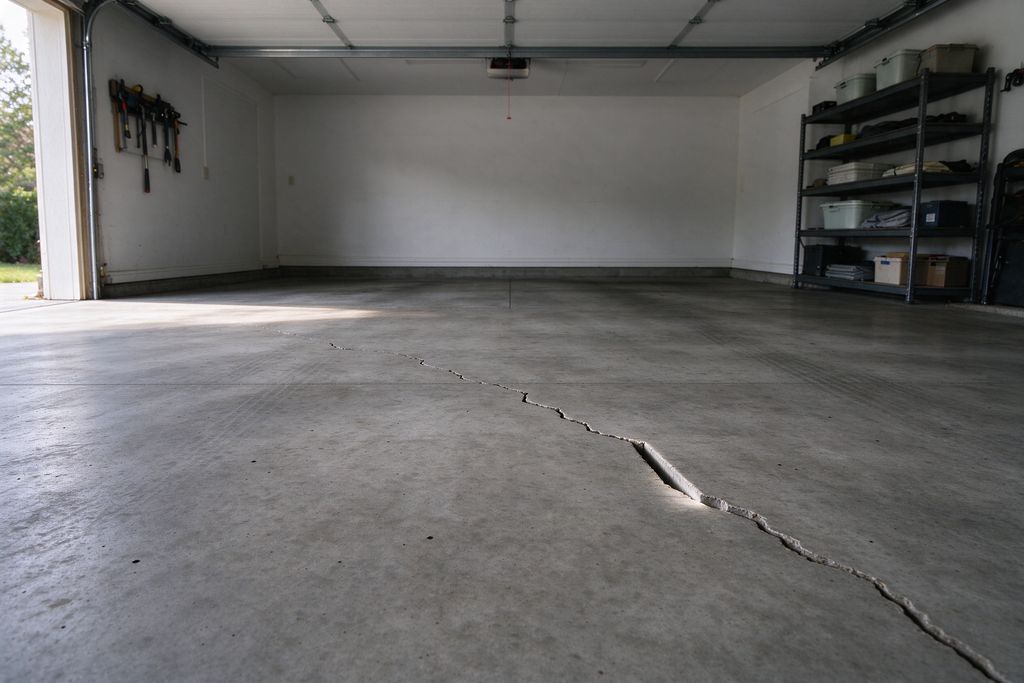
A slab that has been sitting unsupported over a void often has hairline cracks you cannot see yet. Lifting puts it in bending, and sometimes a panel cracks during the lift. Good crews lift slowly, from several holes, in small increments. Ask before work starts what happens if a panel cracks: do they stop, keep lifting, or price a replacement?
Other common failure points:
- Over-lifting. Pump pressure builds faster than the slab moves, and a panel ends up higher than its neighbours. A string line or laser level on the job prevents it.
- Filling the wrong void. Material can travel along a utility trench or under the house instead of under the slab. Ask how they locate voids and how they will protect buried lines.
- Lifting into a heave. If one panel rose from swelling clay, raising the others to meet it can make the whole surface slope the wrong way.
- Leaving the joints open. The most common reason a lifted slab drops again is water entering the same joints that started the problem. See the joint sealing and drainage guide.
Lifting a slab tight against a foundation wall can push on the wall. Next to the house, ask the crew how they will keep the lift from loading the foundation, and if the wall itself is cracking or moving, talk to a structural engineer before anyone lifts.
If this, then that
- Slab is whole, void is big, budget mattersTHENStart with mudjacking bids.
- Soft or wet soil, or right against the houseTHENGet foam bids; weight matters here.
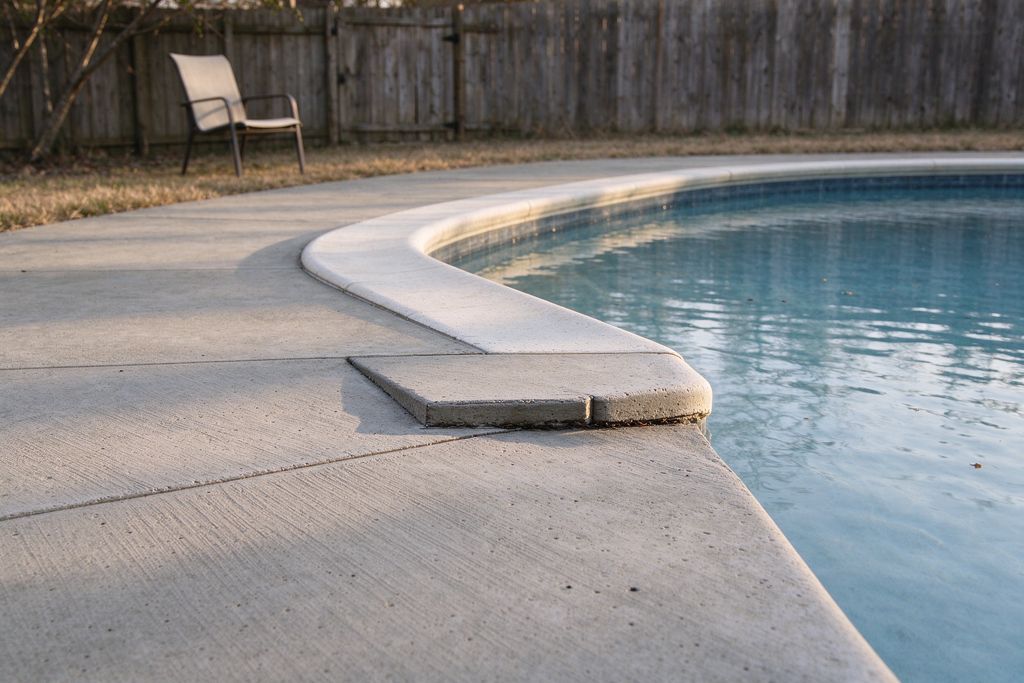
- Pool deck with plumbing under itTHENFoam, with a crew that maps the lines first.
- Broken into loose pieces or badly scaledTHENReplace, and fix the base while it is open.
- The slab went up, not downTHENGrind, cut and replace, or raise the neighbours.
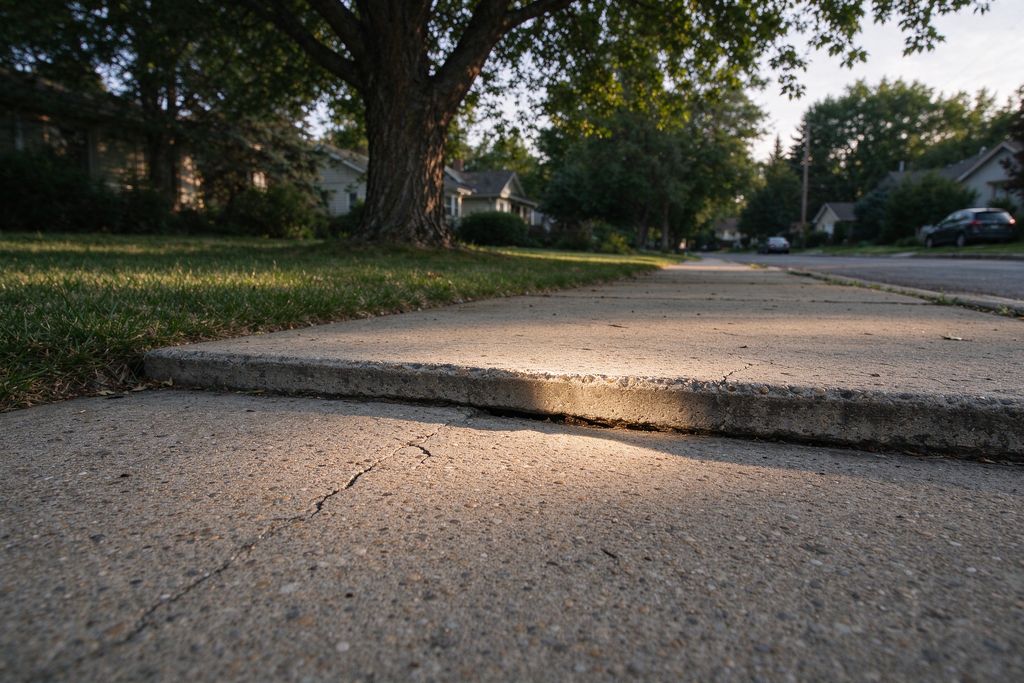
- Small trip edge, under about 1/2 inchTHENGrinding may be enough; compare with a lift.
Lifting is usually faster, cleaner and cheaper than replacement when the concrete is sound. Foam wins on weight and speed; slurry often wins on cost for large voids. Whatever you pick, the joint sealing and drainage work is what decides whether you pay for this twice.
Questions
Is polyurethane foam better than mudjacking?
Neither is better everywhere. Foam is lighter, uses smaller holes and cures faster. Mudjacking uses a heavier cement slurry that fills large voids with solid material and usually costs less per job. The slab, the soil and your timing decide which fits.
How long before I can drive on a lifted driveway?
Foam lifts often allow traffic the same day. Mudjacking slurry usually needs longer, commonly a day or more. Replacement concrete typically needs about a week before cars. Your contractor sets the actual time for your job.
When should I replace instead of lift?
Replace when the slab is broken into loose pieces, crumbling or scaling badly, or pushed up rather than sunk. Lifting raises concrete; it cannot repair bad concrete or lower a heaved panel.